Getting and staying active is one of the most important things an older adult can do for long-term health, and it does not require a gym membership, high-energy classes, or any prior athletic experience.
Falls are the leading cause of injury-related death among adults ages 65 and older, and the fall death rate has been rising. More than one out of four older adults falls each year, and falling once doubles the chances of falling again. That is a serious concern, but it is also one with a well-researched solution. Balance activities help prevent falling, which reduces the risk of injuries such as bone fractures, and strengthening back, abdomen, and leg muscles also improves balance.
According to the CDC, adults 65 and older need at least 150 minutes a week of moderate-intensity aerobic physical activity, which can be spread out across the week or broken into smaller sessions throughout the day. The good news is low-impact exercises for seniors make it entirely achievable.
At Encore at Champlin, residents in Champlin, MN, have access to daily activities, scheduled programming, and a team that knows how physical wellness connects to overall quality of life. Whether a resident is just starting out or already has an active routine, the right exercises can make a real difference.
Why Low-Impact Workouts Matter for Older Adults
Low-impact does not mean easy or ineffective. It means that one foot stays on the ground or the body stays supported, reducing stress on the joints while still challenging muscles, improving cardiovascular health, and building balance.
Research shows that walking alone decreases the risk of cardiovascular and cerebrovascular diseases, type 2 diabetes, cognitive impairment, and dementia, while also improving mental well-being, sleep, and longevity.
Other workouts — like chair exercises, yoga, tai chi, and water aerobics — offer similar returns across strength, flexibility, and coordination. Many older adults in the United States do not meet the recommended amount of physical activity, and inactivity is 30% higher among those with a chronic disease, which makes finding approachable, sustainable options all the more important.
1. Walking
Walking remains one of the most effective and accessible low-impact cardio exercises available to older adults. It requires no low-impact workout equipment, no special training, and it can be adjusted for any fitness level.
Brisk walking for 30 minutes a day, five days a week, can reduce the risk of several age-associated diseases. For those just getting started, even five to 10 minutes at a comfortable pace counts and builds over time. Begin with short, flat routes. Wear supportive shoes and consider walking at the same time each day to build a routine.
Walking indoors along hallways, in a shopping center during cold Minnesota winters, or outside through Champlin’s parks and trails near the Mississippi River and Elm Creek Park Reserve are all strong options. Residents at Encore at Champlin can also enjoy the property’s outdoor courtyard on pleasant days.
2. Chair Exercises
Chair exercises are among the most practical strength and balance exercises for seniors, particularly for those who are new to exercise, recovering from an injury, or managing a chronic condition.
A systematic review and meta-analysis of 25 studies found that chair-based exercise programs improve both upper and lower extremity function, and the findings confirm that chair-based exercises are effective and should be promoted as simple, easily implemented activities to maintain and develop strength in older adults.
One of the most recommended movements is the Chair Rise Exercise, endorsed by the CDC’s STEADI fall prevention program.
Chair Rise Exercise
What it does: Strengthens the muscles in the thighs and buttocks. These are the same muscles that make standing up from a seat, climbing stairs, and walking easier.
How to do it:
- Sit toward the front of a sturdy chair with knees bent and feet flat on the floor, shoulder-width apart.
- Rest hands lightly on the seat on either side, keeping the back and neck upright and chest slightly forward.
- Breathe in slowly, then lean forward so the weight shifts to the front of the feet.
- Breathe out and slowly stand up, using hands as little as possible.
- Pause for a full breath in and out.
- Breathe in and slowly lower back down. Do not collapse into the chair. Control the descent throughout.
- Breathe out, then repeat 10 to 15 times. If that number feels too challenging at first, start with fewer and gradually work up. Rest for a minute, then complete a final set of 10 to 15.
Over time, try to complete the movement without using hands at all.
3. Tai Chi
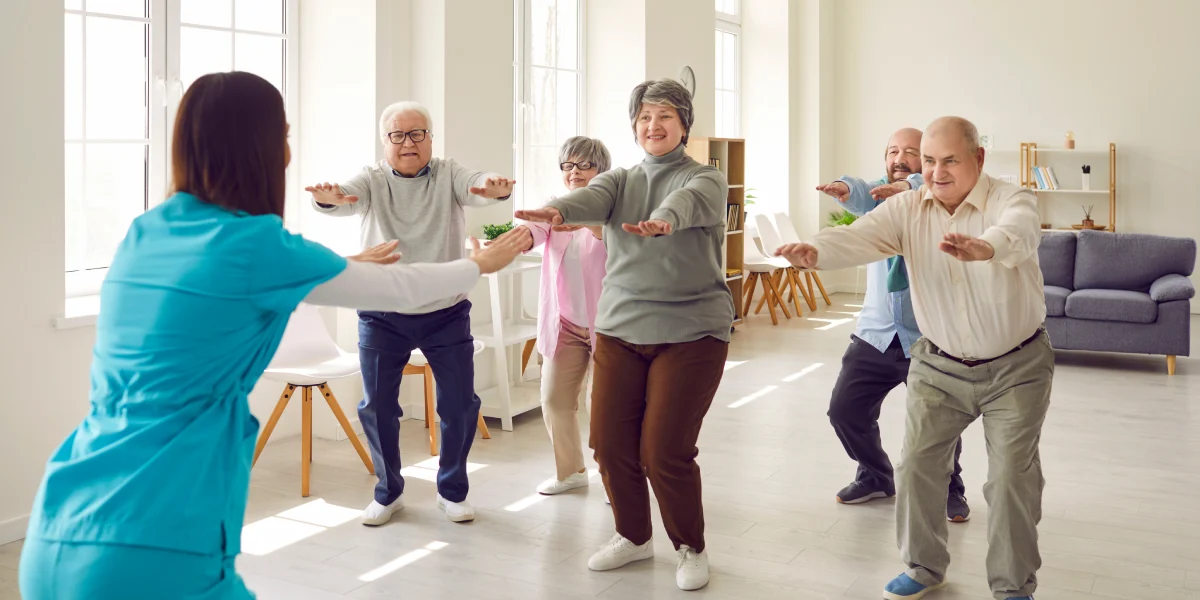
Tai chi is a slow, flowing practice that builds balance, coordination, and lower-body strength. These are the three areas directly linked to fall prevention. Research has shown that tai chi is effective in improving quality of life in adults with chronic pain, lung conditions, and heart conditions. It also requires no equipment and can be done in small spaces, making it an excellent indoor option during Champlin’s colder months.
The movements are gradual and controlled, which makes tai chi approachable even for older adults who have not exercised in a while.
4. Chair Yoga
Chair yoga brings the well-documented benefits of yoga — flexibility, core strength, and reduced joint pain — to adults who may not be able to get up and down from the floor comfortably. Two 45-minute sessions of chair yoga per week have been shown to reduce pain in adults with osteoarthritis, according to a study published in the Journal of the American Geriatrics Society. The practice also supports stress reduction and better sleep, both of which matter for overall well-being.
The CDC includes yoga among the multicomponent physical activities that count toward the recommended weekly activity totals for older adults, since it addresses aerobic activity, muscle strength, and balance in a single session.
5. Water Aerobics
Moving in water supports the joints while providing natural resistance, which makes water aerobics one of the best low-impact workouts for older adults managing arthritis or recovering from injury. Pool-based exercise is frequently recommended by physicians following fall-related injuries or joint procedures.
6. Light Strength Training
Muscle mass naturally declines with age through a condition known as sarcopenia, and that loss affects balance, mobility, and the ability to perform everyday tasks. Light strength training two to three days per week directly addresses this.
Exercises that use body weight for resistance, such as modified push-ups, sit-to-stand movements, and leg lifts, count toward muscle-strengthening activity guidelines set by the CDC. Resistance bands are another low-impact workout equipment option that is inexpensive, portable, and easy to use seated or standing.
Strength training does not require heavy weights. Consistency and gradual increases in repetitions over weeks and months produce measurable results in strength, posture, and independence.
7. Stretching and Flexibility Work
Stretching keeps muscles and joints more limber, reduces the risk of injury during other activities, and supports better posture. Gentle stretches targeting the neck, shoulders, hips, and legs are especially helpful for older adults who sit for extended periods.
Flexibility work pairs well with all the other exercises listed here. Even five to 10 minutes of stretching at the start or end of the day builds range of motion over time.
Frequently Asked Questions About Low-Impact Exercises
The CDC recommends that adults 65 and older aim for at least 150 minutes of moderate-intensity aerobic activity per week, combined with muscle-strengthening activities on two or more days. That can be spread across multiple shorter sessions, as there is no requirement to do it all at once.
The CDC notes that the rising rate of fall-related deaths among older adults can be directly addressed through screenings and interventions that target balance and strength. Exercises like tai chi, chair rises, and light strength training all contribute to fall prevention.
Starting slowly is completely appropriate. Even five to 10 minutes of walking or a few chair rises per day is a meaningful beginning. Any amount of movement is better than none, and most low-impact workouts are designed to be scaled to a person’s current abilities. Always check with a doctor before beginning a new routine.
Exercise is often recommended for those conditions. Low-impact options like water aerobics, chair yoga, and tai chi place minimal stress on the joints while still building strength and flexibility. A physician or physical therapist can help identify which activities are most appropriate.
Moving Well Means Living Well
Staying active as an older adult is one of the most effective ways to maintain independence, reduce fall risk, and support long-term health. Low-impact exercises for seniors like walking, chair exercises, tai chi, yoga, water aerobics, and light strength training offer a full range of benefits without placing excessive strain on joints or requiring advanced fitness.
At Encore at Champlin, a full-time activity team coordinates daily programming designed to keep assisted living and memory care residents physically active and engaged in ways that align with their individual needs and abilities.
Schedule a Tour at Encore at Champlin
Encore Assisted Living and Memory Care at Champlin serves older adults in Champlin, MN, and the surrounding communities with personalized assisted living and memory care. To learn more about life at Encore at Champlin or to schedule a tour, contact our team today.