

Many adult children who notice that their parent is starting to struggle with everyday tasks wonder what to do or where to turn. They’re afraid of underreacting, potentially leading to their parent getting hurt, but also of doing too much and causing a fight. If the signs are there that a senior loved one can no longer live completely on their own, the conversation about current and future care becomes a responsibility that few adult children want.
That’s why being confident about the decision is so important. The signs of a senior’s changing abilities are often evident in their activities of daily living (ADLs), which can show what level of daily living assistance they may need now. Here’s a guide to spotting the signs that a parent needs more assistance, and how assisted living communities like Encore at Champlin can help families make their decision with more confidence.
What Are Activities of Daily Living?
Activities of daily living, often shortened to ADLs, are the basic self-care tasks a person completes each day to live independently. Healthcare professionals use them to gauge how much assistance an older adult may need, but adult children can also use them to tell if their parent needs more assistance.
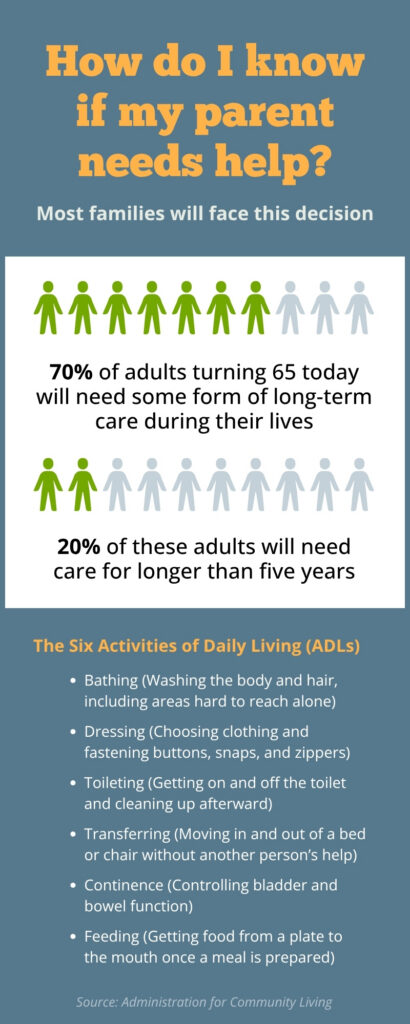
The commonly used metric is called the Katz Index, which outlines six ADLs for caregivers or, in this case, family members, to watch for:
- Bathing and keeping clean, including washing hair or reaching areas that are hard to manage alone
- Dressing, from selecting clothing to fastening buttons or zippers
- Toileting, which covers getting on and off the toilet and cleaning up afterward
- Transferring, meaning moving in and out of a bed or chair without another person’s help
- Continence, meaning control over bladder and bowel functions
- Feeding, or getting food from a plate to the mouth once a meal is prepared
The Katz scale awards a point for each task that can be done alone, which means that a score closer to six indicates more independence while closer to zero indicates a greater need for daily living assistance. According to the U.S. Department of Health and Human Services, around 7 in 10 people turning 65 will need some form of long-term care in their life.
This means that watching for signs that a parent needs help with their ADLs is not something that families only need to do once. Adult children can keep this list in the back of their mind moving forward so they notice issues before they become emergencies.
 Understanding Instrumental Activities of Daily Living
Instrumental activities of daily living (IADLs) are a step above ADLs. They involve more complex skills that people generally need to manage life independently, though they focus less on daily living support. IADLs include a person’s ability to manage money, take medications, cook meals, clean their house, find transportation, shop for what they need, and communicate with their family and friends.
IADLs are significant because, since the tasks are complicated, they are often the first signs that a parent needs assistance with activities of daily living. These signs can be subtle and differ for different people, but families can watch for these common patterns:
- Unopened mail, unpaid bills, or confusion over finances
- Unexplained weight loss or gain
- An empty refrigerator or a reliance on snacks rather than full meals
- Wearing the same clothing repeatedly, or other noticeable changes in hygiene
- Missed medications or difficulty keeping track of a daily routine
- Unexplained bruises, or trouble getting up from a chair or bed
- Growing isolation and withdrawal from friends or activities
- A cluttered residence or chores left undone
Noticing one of these signs does not mean a parent needs to move right away, but multiple IADLs can point to a single ADL, which often requires some change. For example, unexplained physical changes and an empty refrigerator may both indicate that there’s a problem with driving or scheduling transportation. Often, issues with activities of daily living show up in more than one related issue, so connecting the dots is important to finding the root cause of what’s happening.
Types of Daily Living Assistance for Seniors
Once families are confident that they have noticed issues with their loved one’s activities of daily living, they’re confronted with multiple options. The right choice depends on how much help your loved one needs and how those needs could change over time.
Family Caregiving
Many adult children begin by providing help themselves. This can work for lighter needs or as a period of transition between property ownership and assisted living. However, caregiving is a difficult situation that often becomes more demanding as the parent’s needs change.
In-Residence Care
A paid caregiver can visit a parent’s private residence for a set number of hours each week. This option may suit lower-level needs, though costs climb as the required hours increase, and many in-home care services are not equipped to handle higher levels of care.
Assisted Living
In an assisted living community, residents live in their own apartment while a team provides help with ADLs, meals, housekeeping, and medications. This model provides the assistance they need while supporting independence at each stage so they never have to give up things they can still handle.
Memory Care
For seniors with Alzheimer’s or dementia, memory care offers specialized support in a secure setting, with a team trained to assist residents through each stage of the condition. Issues with ADLs and IADLs can be early signs of dementia, but many seniors have issues with activities of daily living without progressing to needing memory care.
How Assisted Living at Encore at Champlin Supports Independence
At Encore at Champlin, assisted living is built around personalized care that gives each resident as little or as much help as they need with their activities of daily living. A team member is available around the clock to assist with bathing, dressing, medications, and daily routines, and care levels can adjust as needs change.
Residents live in private apartments and enjoy chef-prepared meals, a beauty salon and spa, shared amenity spaces, and scheduled transportation to appointments and errands. Planned activities, exercise classes, card games, and day trips give residents plenty of chances to stay active and social. Encore at Champlin is also pet-friendly, so a beloved companion can come along.
The memory care neighborhood at Encore at Champlin can help if a parent needs to move to a higher level of care. This gives families peace of mind knowing that their loved one’s care can be adjusted as needs change, preserving independence while allowing a seamless transition to memory care in the same community. Without this two-tiered support, many families delay changing their loved one’s situation until a medical emergency forces the decision.
Frequently Asked Questions
The six basic activities of daily living are bathing, dressing, toileting, transferring, continence, and feeding. Healthcare professionals use them to measure how much help an older adult needs each day.
ADLs are basic self-care tasks such as bathing and dressing, while IADLs are more complex tasks such as managing money, preparing meals, and arranging transportation.
When a parent regularly struggles with several activities of daily living, misses medications, eats poorly, or withdraws from friends, assisted living can provide the daily support needed to protect health and independence.
Encore at Champlin offers a specialized memory care setting for seniors with Alzheimer’s or dementia, along with assisted living and short-term respite stays.
Assisted Living and Memory Care Options in Champlin
Having assisted living and memory care on one campus gives families flexibility as their parent needs more help with activities of daily living. This also means that if their abilities stay the same, they can stay at their current level of care. The team at Encore at Champlin also offers respite care for family caregiving situations, helping everyone take a breather while trained professionals look after their loved one.
Take the Next Steps at Encore at Champlin
If you notice changes in your parent’s ADLs or IADLs, your parent may need additional daily support. Schedule a visit at Encore at Champlin to learn how assisted living and memory care can support a parent with activities of daily living and how respite care can help family caregivers learn their options.